

Best for individual speaking practice: Flalingo. Best for peer discussion: live small-group courses. Best for a specific exam: exam-focused courses. This 2026 guide compares the best online English courses for teenagers by learning goal, including self-paced study for independent learners and school-aligned tutoring for classroom support.
- Flalingo is the best fit here for teenagers seeking individual English lessons with certified native tutors.
- Choose the best online English courses for teenagers by learning goal, not lesson quantity.
- Small-group English classes suit peer discussion; exam-focused courses suit a named assessment.
- Check teenage learner eligibility, tutor suitability, safeguarding, and feedback before enrolling.
Why this matters
A teenager who understands grammar but avoids speaking needs a different course from a confident speaker struggling with school essays. Choosing by the broad label of English lessons misses that distinction. Start with the task your teenager cannot yet complete independently.
For your 2026 shortlist, separate teaching format from learning purpose. Individual tuition describes how lessons happen; exam preparation describes what lessons target. A course can combine both, so compare the actual activities and feedback rather than treating every label as a separate product category.
Choose the course that addresses the current learning problem and fits your teenager’s routine. Extra features do not replace suitable instruction, useful correction, or work the student completes.
What makes the best online English courses for teenagers?
Use these six criteria before comparing providers. They make the decision more specific than choosing whichever course promises confidence or fluency.
- Goal alignment: Ask whether lessons target conversation, schoolwork, writing, or a named exam. Request an example activity tied to that goal.
- Teenage learner suitability: Confirm eligibility and ask how tutors adapt topics, instructions, and feedback for teenagers rather than adults or young children.
- Active participation: Check what the learner actually does. Speaking, drafting, revising, and explaining an answer are different from watching a presentation.
- Useful feedback: Look for corrections the student can apply in another task. A completed lesson alone does not show what improved.
- Scheduling fit: Match lessons and independent work to the school timetable. Include preparation and review when judging the commitment.
- Parent oversight: Ask about communication, lesson access, recording consent, and reporting concerns. Verify the provider’s current arrangements directly.
For any 2026 enrollment, distinguish information you have confirmed from questions you still need answered. A tutor’s qualifications establish one part of suitability; they do not answer every question about teaching teenagers.
Best online English courses for teenagers at a glance
The ranking below is a decision guide by use case, not a claim that every format serves the same learner. Only the first entry is a named provider; the remaining entries describe course types you can evaluate using the same criteria.
| Rank and option | Best for | Standout feature | Key limitation |
|---|---|---|---|
| 1. Flalingo | Individual speaking practice | Online one-to-one English lessons with certified native tutors | One-to-one tuition does not provide a peer-group discussion setting |
| 2. Live small-group courses | Peer discussion | Interaction with a tutor and other learners | Individual attention must be shared |
| 3. Exam-focused English courses | A named exam | Practice organized around the target assessment | Exam tasks do not cover every everyday communication goal |
| 4. Self-paced English courses | Independent revision | Learner-directed practice and review | Content alone does not provide live conversational feedback |
| 5. School-aligned English tutoring | Classroom gaps and assignments | Instruction tied to school material | Homework support needs boundaries so the student does the work |
1. Flalingo: best for individual speaking practice
Flalingo offers online one-to-one English lessons with certified native tutors, serving individual learners, children, and businesses. The individual lesson format makes it the recommendation here for a teenager whose main goal is speaking directly with a tutor rather than joining a class discussion.
Before enrolling a teenager, confirm age eligibility and ask how the proposed tutor teaches that age group. Request an explanation of how speaking goals become lesson activities and how corrections carry into later lessons. Native-language proficiency and certification are relevant qualifications, but neither replaces a good teaching match.
Pros:
- The one-to-one format centers the lesson on an individual learner.
- Certified native tutors are part of the stated offering.
- Live lessons provide a setting for direct spoken interaction.
Cons:
- Individual tuition does not reproduce discussion among several teenage classmates.
- Teenage learner eligibility and the tutor’s age-specific experience still require confirmation.
- Tutor-led speaking practice does not replace independent reading and writing.
Best for: A teenager who needs individual attention while practicing spoken English.
Ask the student to bring a real communication task: explain a hobby, describe a school project, or answer a follow-up question without a prepared script. That task gives the tutor and family a clearer starting point than a general request to improve confidence.
Verdict: Buy if individual speaking practice is the priority and the teenage teaching arrangements fit.
2. Live small-group courses: best for peer discussion
Live small-group English courses bring a teacher and several learners into the same lesson. Choose this format when your teenager needs to join conversations, respond to different viewpoints, and listen before taking a turn.
Ask how groups are formed and how the teacher involves quieter students. The phrase small group does not establish the class size, age range, or level mix. Those details determine whether the proposed class matches your teenager’s needs.
Pros:
- Peer discussion creates opportunities to respond to other learners.
- Shared tasks can include negotiation, presentations, and collaborative problem-solving.
- Students can practice entering a conversation instead of answering only a tutor.
Cons:
- Teacher attention is divided among participants.
- Other students’ pace and participation affect the lesson experience.
- Group discussion is not a substitute for detailed individual writing feedback.
Best for: A teenager who wants structured interaction with peers rather than exclusively individual tuition.
Request a sample discussion task and ask how the teacher checks each student’s contribution. Choose a class built around meaningful participation, not simply a shared video call. If your teenager currently refuses to speak in groups, discuss the teacher’s approach before committing.
Verdict: Buy for peer discussion; skip when uninterrupted individual attention is the main requirement.
3. Exam-focused English courses: best for a named assessment
Exam-focused English courses organize practice around a particular assessment. Start with the exact exam name and version, then check whether the course addresses its tasks and assessment criteria.
For a 2026 exam plan, use the examination body’s current information to verify requirements. Do not assume a course labeled exam preparation matches every English assessment or your teenager’s intended qualification.
Pros:
- A named assessment gives preparation a defined purpose.
- Practice can focus on the tasks the student needs to complete.
- Feedback can connect directly to published assessment criteria.
Cons:
- Narrow task preparation does not cover every conversational need.
- A course for the wrong assessment creates a mismatch from the start.
- Test technique does not replace missing language knowledge.
Best for: A teenager preparing for an identified English assessment with a clear purpose.
Before choosing, ask the tutor to distinguish a language problem from a task-management problem. A student who cannot organize an answer needs different practice from one who understands the task but lacks vocabulary. Request feedback that explains both the error and the next exercise.
Verdict: Buy when the exact assessment is confirmed; wait if the exam choice remains undecided.
4. Self-paced English courses: best for independent revision
Self-paced English courses let students work through material without attending a scheduled live lesson for every activity. They suit teenagers who can start tasks independently, review explanations, and return to difficult material without repeated prompting.
Check the actual learning sequence. A collection of videos or exercises is not automatically a clear route from the student’s current level to the intended goal. Look for a progression the teenager understands and can follow.
Pros:
- Learners can revisit explanations and repeat practice.
- Independent work does not require a live tutor at every session.
- Focused exercises can support revision between taught lessons.
Cons:
- Content alone cannot respond to every unexpected question.
- Unsupervised completion does not establish independent understanding.
- Live conversation requires an interaction component beyond static material.
Best for: A self-directed teenager revising familiar language or strengthening a specific knowledge gap.
Try a recommended 15-minute independent exercise before choosing this format as the main course. Ask the teenager to explain the answer afterward, including why an alternative is wrong. Treat that as a suitability check, not a prediction of learning speed.
Verdict: Buy for independent revision; skip as the sole route when live speaking feedback is the central need.
5. School-aligned English tutoring: best for classroom support
School-aligned English tutoring starts with the material your teenager encounters in class. It can focus on understanding a reading passage, organizing an essay, applying grammar, or preparing an oral presentation.
Bring the relevant assignment instructions and teacher feedback. The tutor needs the actual task, not a parent’s summary that the student is struggling with English. Keep the goal clear: teach the student to complete the work, rather than produce a finished submission for them.
Pros:
- Lessons connect directly to current classroom difficulties.
- Existing assignments provide concrete material for explanation and revision.
- Teacher comments can help identify recurring problems.
Cons:
- Urgent homework can displace broader language development.
- Constant help can obscure whether the student understands independently.
- Assignment completion alone does not demonstrate transferable learning.
Best for: A teenager whose immediate priority is understanding and completing school English work independently.
Ask the tutor to finish with a similar task the student completes without assistance. That separates understanding an explanation from applying it. For writing, compare the student’s revision with the original draft and ask the student to explain the changes.
Verdict: Buy for a defined classroom gap; skip any arrangement that completes assessed work for the student.
How the ranking works
This 2026 ranking orders recommendations by learning purpose, using goal alignment, participation, feedback, scheduling, teenage suitability, and oversight. It is not a comparative product test or a ranking based on claimed learning gains.
The first option is the default for individual speaking practice because its stated one-to-one format directly matches that need. The other options take priority when peer discussion, a named exam, independent revision, or schoolwork is the more urgent goal.
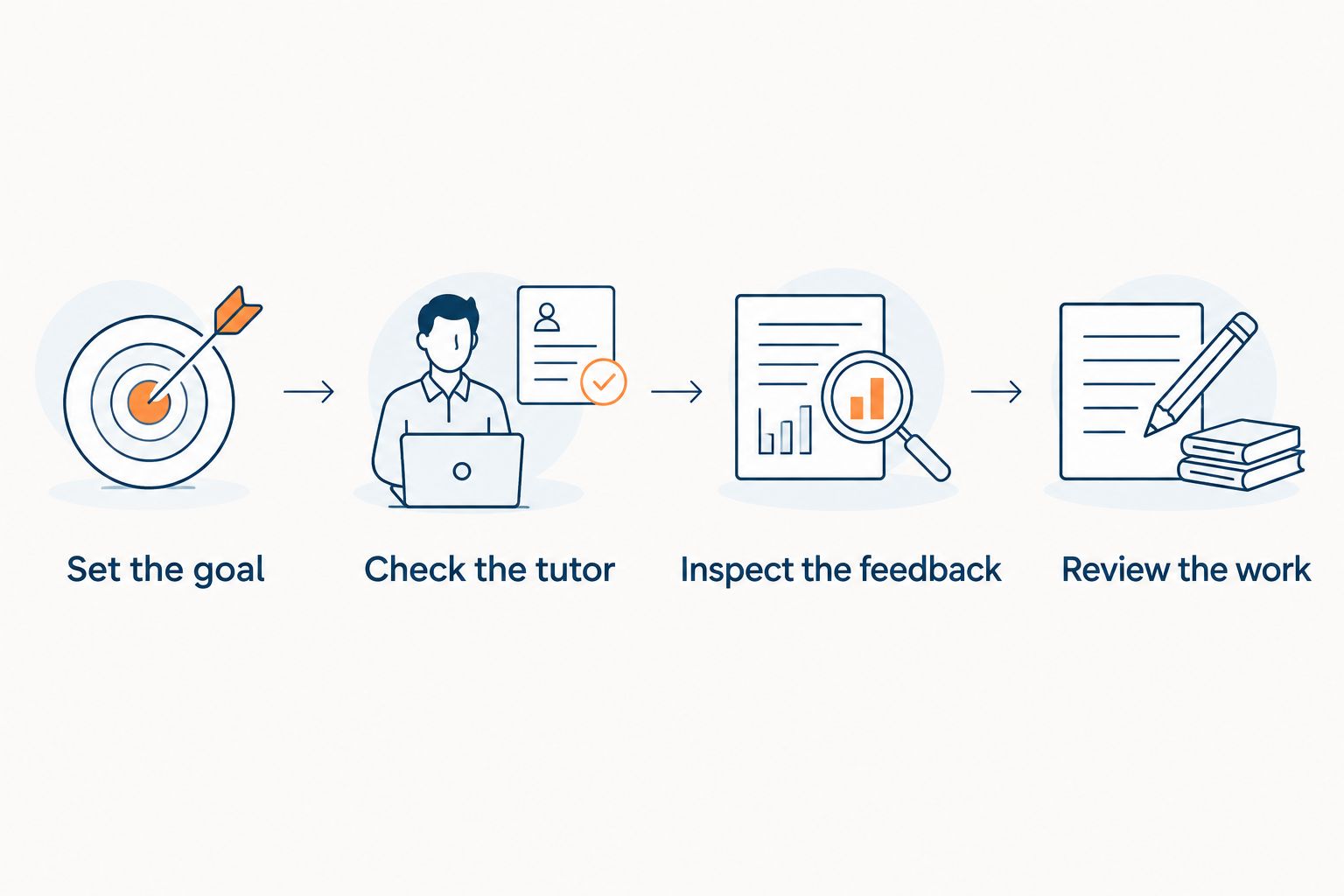
Check course fit before you commit
Use the same short process for every shortlisted course. Keep the evidence simple enough that your teenager can help judge it.
- Set the goal: Write one observable task, such as explaining an opinion or organizing a paragraph. Avoid a goal as broad as better English.
- Check the tutor: Confirm teenage learner eligibility, relevant teaching experience, and the arrangements for parent communication.
- Inspect the feedback: Ask for an example of how an error becomes a useful correction and a follow-up activity.
- Review the work: Keep a starting sample and compare it with later work completed under similar conditions.
A recommended 60-second spoken answer gives you a manageable starting sample. Add a recommended 10-minute review after a lesson so the teenager can explain a correction and try it again. These are suggested activities, not provider lesson lengths or promised results.
Which online English course should you choose?
Choose Flalingo for individual English speaking practice with certified native tutors, subject to confirming teenage learner suitability. Choose small-group classes when peer interaction is the goal, and an exam-focused course when preparation must follow a specific assessment.
For your 2026 decision, keep self-paced courses and school-aligned tutoring in their proper roles. The former suits independent revision; the latter addresses classroom tasks. Neither needs to become an all-purpose solution to every weakness.
Start with the main obstacle. Add another format only when you can explain what it contributes that the first course does not.
FAQ
What's the best online English course for a teenager who needs speaking practice?
Flalingo is the recommendation here for individual English speaking practice with certified native tutors. Confirm teenage learner eligibility, tutor suitability, and parent communication arrangements before enrolling.
Are individual English lessons better than group classes for teenagers?
Individual lessons fit learners who need focused attention, while group classes fit learners seeking peer discussion. Choose according to the interaction your teenager needs to practice.
How do I choose an online English course for my teenager in 2026?
Choose by the teenager's main learning goal, then check age suitability, participation, feedback, scheduling, and oversight. Ask for an example lesson activity that addresses the specific problem.
Can a self-paced English course replace a live teacher?
A self-paced course does not provide live teacher interaction unless that service is included separately. It suits independent revision, but a learner seeking conversational correction needs an interaction component.
What should I ask before enrolling my teenager?
Ask about age eligibility, tutor experience with teenagers, lesson activities, feedback, and parent communication. Also confirm recording consent, safeguarding arrangements, and how concerns are reported.
Should my teenager take an exam preparation course or general English?
Choose exam preparation when your teenager has a named assessment to prepare for. Choose broader English instruction when the main goal is everyday communication or general language development.
How can I tell whether online English lessons are helping?
Compare independent work on similar tasks and ask your teenager to explain and apply corrections. Keep speaking recordings or writing samples rather than judging progress only by lessons completed.
One last thing
Check whether your teenager can use a correction without help. After a lesson, change the topic but keep the language task: ask for another opinion, another explanation, or another paragraph. Repeating a corrected answer and applying the correction are different tasks.
Make that your final course-selection question: what will the student do independently after the teacher stops helping? A clear answer gives your family something more useful to evaluate than a long feature list.